Production
As many enthusiasts are aware, 1.5 models can be divided into three separate phases of production – the Mks 1, 2 & 3. The Mk 1 was the most numerous with over 17,000 being built until March 1960.
When introduced the Mk2 only showed a number of subtle changes. Most noticeable was the introduction of internal boot & bonnet hinges and a more spacious parcel shelf/glove box arrangement. There were also some small mechanical updates introduced as well.
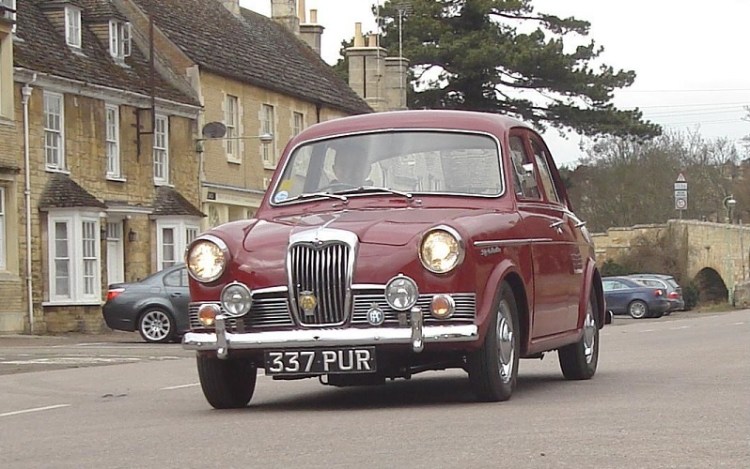
In November 1961, an updated version of the car was introduced, the Mk3, which had several noticeable design changes and mechanical improvements. The most obvious was the subtle re-styling of the front panel area and rear light clusters. The interior trim was also changed, with the two-tone style seats and door panels being changed for just a one colour option. Mechanically, the most noticeable change was to update and strengthen the fragile gearbox.
BMC must have felt that the new Mk3 was worthy of some coverage and recognition, for they entered a ‘works’ prepared Mk 3 in the 1962 Monte Carlo Rally. You can guess the rest … the Minis, Healeys and Saabs were top of the class, and the 1.5 was nowhere (coming 179th!).
Production Details for the One-Point-Five.
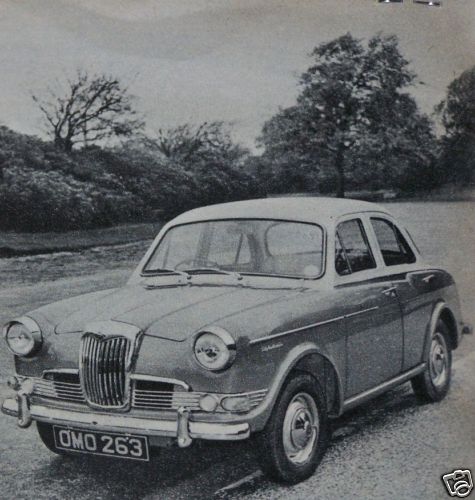
Pre-Production (built at Abingdon)
Dates: October 2nd 1957 to November 18th 1957
Numbers: 150
Chassis Nos.: VAT13/501 to VAA13/650
Notes: In the chassis number the third letter, 1st & 2nd numbers are variables. They denote: body colour, RHD/export and paint finish.
There were at least 3 prototypes built – which are not included in the above production figure. (all subsequent cars were built at Longbridge)

Mark 1
Dates: December 10th 1957 to March 15th(?) 1960
Numbers: 17486
Chassis Nos.: HSR1/260 to HSR1/18121
Notes: Numbers 188 & 250 were used in Jan 1958(!). Numbers 3657-3786 and 10511-10700 were not used during the production run.
From 10701 all engine numbers were different from the chassis numbers.
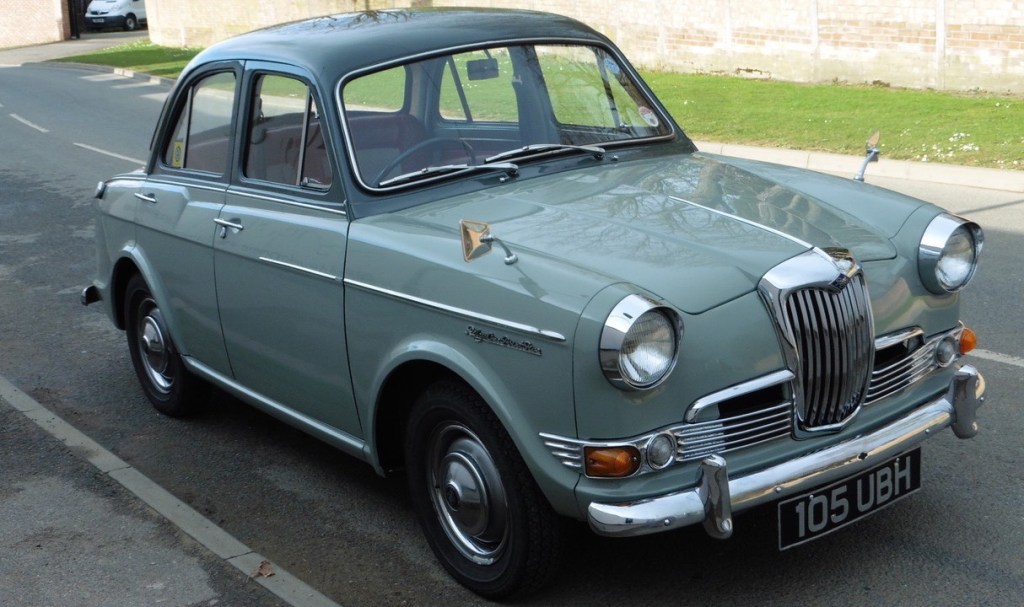
Mark 2
Dates: March 16th(?) 1960 to October 12th 1961
Numbers: 9453
Chassis Nos.: HSR1/18122 to HSR1/27897
Notes: Numbers 18400-18562 and 21833-21958 were not used during the production run. Numbers 17795-17850 were built in Jan/Feb1961 – out of sequence! (note: they are Mk 1 chassis numbers!!)
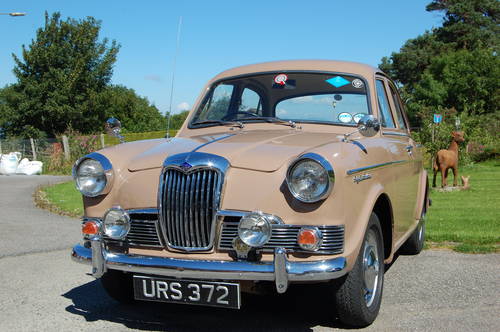
Mark 3
Dates: November 6th 1961 to March 29th 1965
Numbers: 12084
Chassis Nos.: RHS2/101 to RHS2/12184
Notes: Between September 11th and October 9th 1961, 11 show and press Mk3s were built.
As production entered its 7th year, in 1965, it became obvious that the 1.5 was nearing the end of its commercial life. Sales were down and as a consequence, production in 1964 had reduced considerably. Allied to that, was the fact that the 1.5 was looking decidedly old fashioned – the Cortina and Mini were all part of the ‘swinging sixties’, where as the 1.5 was very much your uncle from the fifties.
On March 29th 1965 the last 1.5 rolled of the production line. It was the end of an era and the end of the best selling, most numerous model in Rileys history. It is sad to note that within two years of the date, Riley itself was consigned to the history books.
Was it a Success?
When viewed from a Riley perspective, it was undoubtedly a sales success – outselling any previous or subsequent model with over 39,000 cars being produced.
However it could be argued, quite strongly, that the model could never be judged a ‘true’ Riley. Ok, it had the Riley badge and the luxury trimming associated with the marque, but in the cold light of day it was just a piece of BMC badge engineering. With humble underpinnings from the Morris Minor, styling from a large in-house department and major mechanicals borrowed from the BMC parts bin, it was never more than an exercise in generating more sales.
But this misses the point entirely – it is a Riley – just one conceived and produced in a different era, one where mass production and profit were becoming more important. The car still had plenty of character and individuality to appeal to the discerning motorist – one who wanted the prestigious Riley badge, a surprising turn of speed, a bit of luxury all presented in a compact and affordable package.
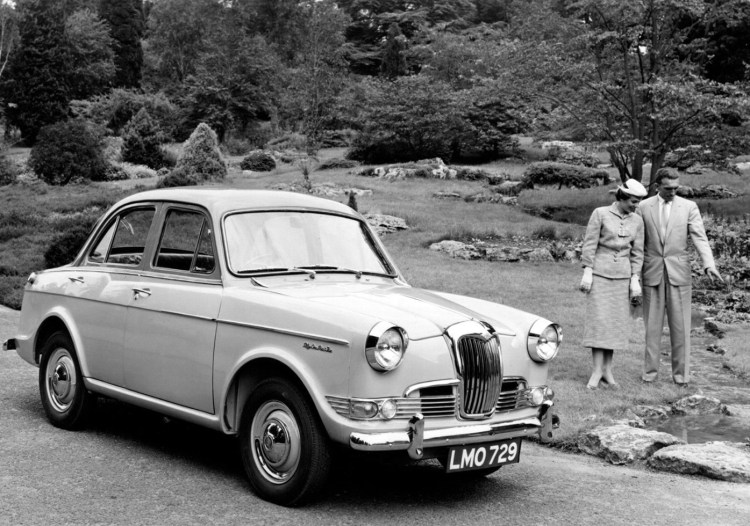
It’s a shame that the 1.5 appeared, in my mind, just at the wrong time. The sixties were just round the corner and with it the new designs like the Mini, Cortina, Herald and Anglia 105E. All these were modern and of the time, while the Riley was very much a 50’s child. BMC were also guilty of letting development slip – surely they could have updated it quite easily. Fitting a 1622cc engine or even an MGB 1800 lump would have transformed the car and even a styling update would have helped. But BMC had other ideas and the 1.5 gently slipped into the history books and, unfortunately, so did Riley.
One of the pre-production press cars in typical 1950’s advertising mode.
 Riley One-Point-Five